


International Recognition and Robust Partnership: Samarkand State Medical University on the Global Stage
Author: Ahmet Balcı, Researcher and Author
Source: Tibbiye Bülteni
Samarkand State Medical University (SamSMU) is actively projecting its rich historical heritage into the future through hands-on education and dynamic international partnerships. Its collaboration with the University of Health Sciences of Türkiye (SBÜ) seamlessly harmonizes an intrinsic devotion to the ancestral homeland with the shared imperative of training future physicians.
Traced back to its founding in 1930, Samarkand State Medical University stands distinguished among Uzbekistan's historic higher education institutions through its clinical training infrastructure and extensive global academic ties. Anchored in Samarkand—a legendary crossroads of scholarship and civilization throughout history—the university today honors this intellectual lineage through modern medical education, rigorous research, and direct service to public health.
The university's institutional ascent is propelled by state-of-the-art simulation training, dedicated research centers, and comprehensive quality assurance anchored in external benchmarking. At the core of its academic bridges with Türkiye stands the University of Health Sciences (SBÜ). The SBÜ Samarkand Faculty of Medicine, jointly operated by both institutions, serves as a tangible manifestation of historical and cultural brotherhood translated into clinical education.
AN EDUCATIONAL ODYSSEY COMMENCED IN 1930
The institution known today as Samarkand State Medical University was originally established on May 7, 1930, as the Uzbekistan State Medical Institute. Expanding over the decades across diverse public health domains, the institute attained full university status by a Decree of the President of the Republic of Uzbekistan on April 1, 2022.
Consequently, the recent conferral of university status represents the evolution, rather than the inception, of the institution: medical training in Samarkand rests upon more than nine decades of unbroken academic tradition.
The university's chronicle also bears compelling evidence of international scientific solidarity. As documented in archives published by the Academician I. P. Pavlov First Saint Petersburg State Medical University, the Leningrad Military Medical Academy was evacuated to Samarkand during World War II, operating within the Samarkand medical facilities between 1942 and 1944. This pivotal era witnessed a profound convergence of distinguished academic cultures and clinical expertise within the city.
The university's contemporary structure enriches this historical bedrock by accelerating research capacities, expanding clinical clerkships, and establishing multilateral educational partnerships across the globe.
PRACTICAL INFRASTRUCTURE ENHANCING EDUCATIONAL QUALITY
In medical pedagogy, translating theoretical concepts into clinical competencies depends fundamentally upon immersion in practical training environments. The Medical Simulation Center at Samarkand State Medical University, inaugurated in 2023, represents a cornerstone investment dedicated to this priority.
Occupying a three-story dedicated facility equipped with 20 specialized training and simulation suites, the center enables comprehensive hands-on practice across general surgery, anesthesiology, intensive care, obstetrics and gynecology, pediatrics, neonatology, and dentistry. Virtual reality (VR) and augmented reality (AR) technologies are fully integrated into the simulation modules.
Students work through simulated clinical scenarios, systematically mastering procedures and refining fine motor skills through deliberate, repetitive practice. The center caters concurrently to undergraduate medical students, clinical residents, master’s candidates, and practicing healthcare professionals, thereby supporting both foundational medical training and continuous professional development (CPD).
This educational framework is further reinforced by the university’s clinical and scientific institutes: specialized initiatives in infectious and parasitic diseases, neurosurgery, rehabilitation, sports medicine, and neurorehabilitation ensure that training remains directly aligned with real-world healthcare needs.
EXTERNAL BENCHMARKING THROUGH INSTITUTIONAL ACCREDITATION
International institutional accreditation occupies a central position within Samarkand State Medical University's quality assurance framework. In accordance with the decision of the Eurasian Central Accreditation and Quality Assurance Agency in Education and Healthcare (ECAQA), the university was granted full institutional accreditation for the term spanning February 20, 2025, to February 19, 2030.
This certification affirms that the university’s institutional processes comply with rigorous external educational benchmarks. While accreditation validates institutional academic quality, specific degree recognition and professional licensing rights remain governed by the statutory bodies of individual sovereign nations.
The university's global civic and scholarly impact is further reflected in the Times Higher Education (THE) Impact Rankings 2026, where SamSMU placed in the 301–400 tier globally. Notably, it attained 82nd position worldwide for UN SDG 3: "Good Health and Well-Being," and ranked within the 101–200 tier for UN SDG 4: "Quality Education." Based upon the United Nations Sustainable Development Goals, this ranking rigorously evaluates research publications, educational outreach, and institutional social stewardship.
JOINT EDUCATION WITH SBÜ: FROM ANCESTRAL TIES TO ENDURING ACADEMIC PARTNERSHIP
The strategic synergy between the University of Health Sciences (SBÜ) and Samarkand State Medical University unites the academic capital of both nations around the joint mission of training modern medical practitioners. The SBÜ Samarkand Faculty of Medicine serves as the institutional foundation of this partnership through coordinated admissions and integrated curricula.
The personal dedication of the Rector of SBÜ, Professor Kemalettin Aydın, toward the ancestral homeland of Uzbekistan, combined with his prioritization of collaborative programs, has cemented the humanitarian and cultural bonds of this alliance. Reverence for Samarkand’s scholastic heritage is united with an absolute responsibility toward educating youth, forging a solidarity that directly shapes students' professional trajectories.
Professor Aydın’s address during the White Coat Ceremony at the Samarkand Faculty of Medicine clearly reflected this philosophy. According to SBÜ communications, Aydın underscored Samarkand’s historic standing in science and medicine, affirming that the physicians emerging from this joint enterprise will serve the shared destiny of both nations.
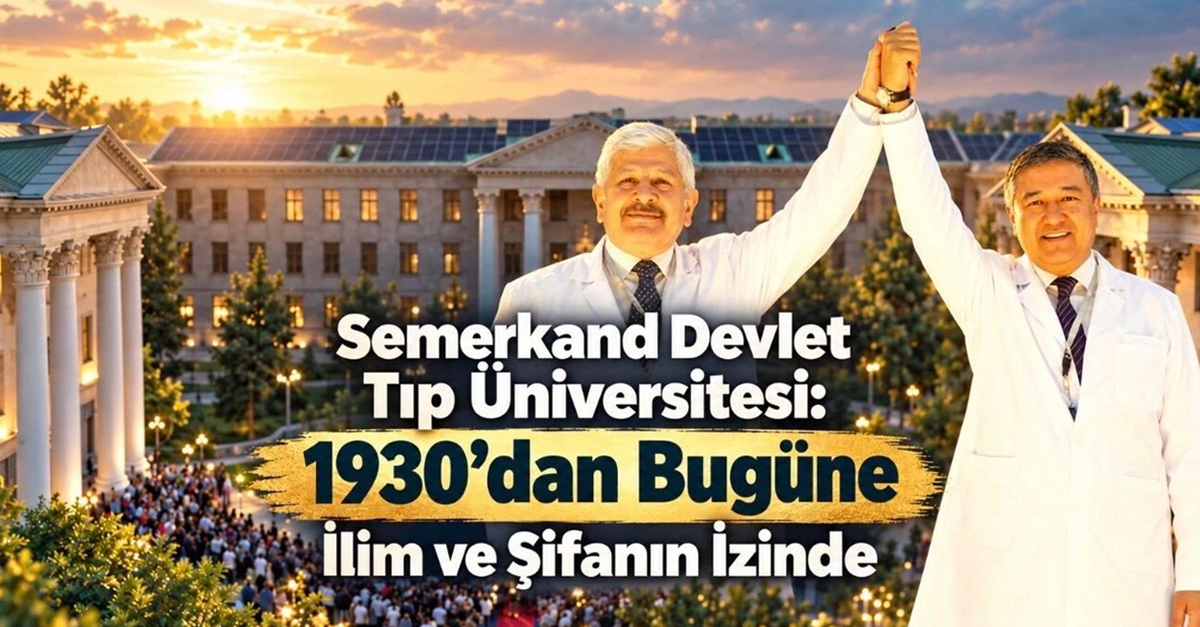
The ceremony was co-hosted by Professor Kemalettin Aydın and the Rector of Samarkand State Medical University, Professor Jasur Alimjanovich Rizaev. Attended by prominent academicians from both countries, the event celebrated 86 medical students receiving their clinical white coats.
Professor Rizaev captured the essence of the alliance with the following words: "Two nations arising from the same root and the same civilization stand side by side once more in the service of science, education, and humanitarian values."
The enduring momentum of the joint program is evidenced by enrollment figures: on June 26, 2026, Samarkand State Medical University formally announced an allocated quota of 100 admissions for the joint medical degree program with SBÜ for the 2026–2027 academic year.
Under the active leadership of both rectors, this cooperative framework sustains long-term academic discourse between Türkiye and Uzbekistan while providing students with direct immersion in the scholarly ecosystems of both nations.
INTERNATIONAL ACADEMIC MOBILITY
The university's international footprint expands consistently through international symposia and academic exchanges. Alongside official Uzbek reports, publications by international partner universities provide detailed insight into these exchanges.
On May 15–16, 2026, the 80th International Conference of Students and Young Scientists convened researchers in Samarkand across fundamental medicine, clinical specialties, and pharmacy.
According to reports released by Kabardino-Balkarian State University, the conference hosted over 1,200 participants representing 47 higher education and scientific research institutions. Scientific papers were presented across 25 thematic sections, allowing junior researchers to showcase novel experimental data and clinical investigations.
Similarly, reports from Voronezh State Medical University highlighted the tangible educational impact of the partnership: visiting faculty delivered specialized clinical lectures and led hands-on seminars for Samarkand students during their visit.
In November 2025, the National News Agency of Uzbekistan (UzA) reported that a visiting delegation from the Zhejiang University School of Medicine engaged in bilateral consultations regarding collaborative oncology research, innovative biomedical technologies, and exchange programs. Furthermore, a memorandum signed with MISIS University in Moscow delineated collaborative initiatives in biomedical engineering and joint scientific inquiry.
PROFESSIONAL EXPERTISE AND EXECUTIVE LEADERSHIP OF JASUR RIZAEV
Serving as Rector since 2020, Professor Jasur Alimjanovich Rizaev is widely recognized as an accomplished dental scientist and experienced academic executive in public health and higher education.
According to official biographical records, Rizaev graduated from the First Tashkent State Medical Institute in 1996, subsequently completing his clinical residency in dentistry. His core scientific output focuses on the clinical characteristics, treatment protocols, and preventative strategies for periodontal diseases. Following executive leadership roles across clinical health institutions, he was appointed Rector of the Tashkent State Dental Institute in 2016.
During his tenure in Samarkand, Professor Rizaev has driven the expansion of international academic consortia. In September 2025, Bukhara State Medical Institute reported that Rizaev chaired the Council of Rectors of Medical Higher Education Institutions of Uzbekistan, steering discussions on clinical pedagogy standards, practical competencies, and dual-degree frameworks.
Rizaev’s executive leadership, complemented by faculty dedication and international partnerships, stands as a primary catalyst for the university's institutional advancement.
COMMUNITY IMPACT: EXTENDING BEYOND THE CAMPUS
Samarkand State Medical University’s mission extends far beyond the perimeter of its lecture halls and research laboratories. In February 2025, general surgery faculty from the university deployed to the Bulungur district of Samarkand to conduct complex endoscopic and laparoscopic surgical procedures, translating tertiary academic expertise directly into regional community healthcare delivery.
Campus investments intentionally reinforce academic life: in August 2026, a newly built 500-bed student residence hall was commissioned to expand campus housing. In the same month, the university held its International Summer School, drawing nearly 50 students from approximately 20 medical schools across five countries. Through research symposia, emergency medicine simulations, and clinical workshops, participants engaged in rich cross-cultural peer learning.
The educational journey inaugurated in 1930 continues today across an expansive spectrum—from foundational clinical skills to global biomedical research. In transmitting centuries of hard-won knowledge to upcoming generations, Samarkand State Medical University, through its robust alliance with SBÜ, continues to build an enduring educational foundation uniting Türkiye and Uzbekistan.
REFERENCES:
- Samarkand State Medical University: official historical records in Uzbek, Russian, and English; rector’s biographical documentation; official dispatches on university centers and academic initiatives.
- University of Health Sciences (SBÜ): official press releases regarding the Samarkand Faculty of Medicine and the White Coat Ceremony.
- ECAQA institutional accreditation decision; Times Higher Education Impact Rankings report; official communications from Kabardino-Balkarian State University and Voronezh State Medical University; Uzbekistan National News Agency (UzA) coverage of international partnerships.