


Science club
Since the establishment of the Department of Pediatric Surgery No. 1, at the initiative of Professor A.M. Shamsiev, the Student Scientific Society (SSS) has been actively operating at the department. Since 1988, members of the society have participated in scientific conferences not only in the Republic of Uzbekistan but also at international scientific forums abroad.

In particular, members of the society regularly participate in annual scientific conferences and competitions in pediatric surgery held in the Russian Federation, where they present the results of their scientific research and receive diplomas, certificates, and medals.

To date, members of the society have won more than 50 gold and silver medals, demonstrating the high level of scientific training and research activity of the students.
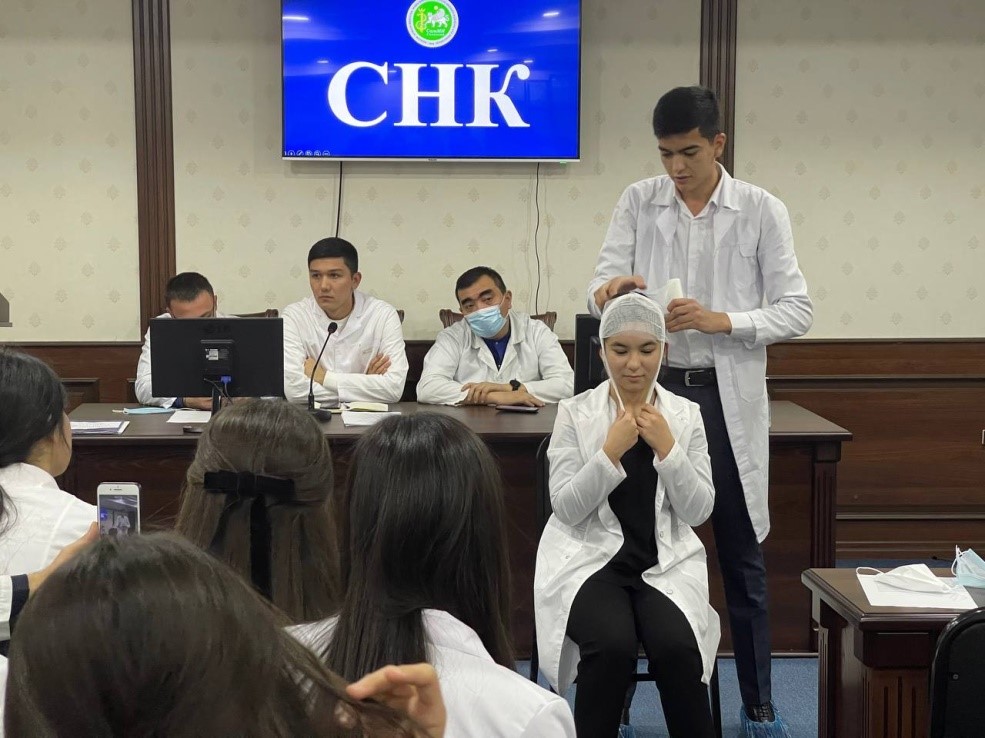
The Student Scientific Society is one of the leading student scientific organizations of the university. Regular meetings of the society are held every Saturday, during which students discuss current scientific issues, present the results of their research, and develop their theoretical and practical skills.
At present, more than 100 students are members of the society. Experienced professors, associate professors, and assistants of the Department of Pediatric Surgery No. 1 provide scientific supervision and methodological support, helping students develop theoretical knowledge, research skills, clinical thinking, and practical competencies.

Particular attention is paid to involving students in scientific research from the early years of their education. From the first year of study, students are encouraged to take an interest in pediatric surgery, participate in clinical case discussions, conduct literature reviews, and prepare scientific reports and presentations.
The Student Scientific Society plays an important role in the formation of future pediatric surgeons and researchers. Approximately 90% of the current academic staff of the department began their scientific research activities in this society during their student years, demonstrating the continuity of scientific traditions and the effectiveness of the department’s system for preparing young researchers.